Documented CTR project example

AC Condensation Overflow Water Damage: A CTR Project Example

An overflowing AC condensation pan caused interior water damage at this home. CTR’s published project update documents removal of affected materials and professional drying equipment set up to dry the structure and help prevent mold.

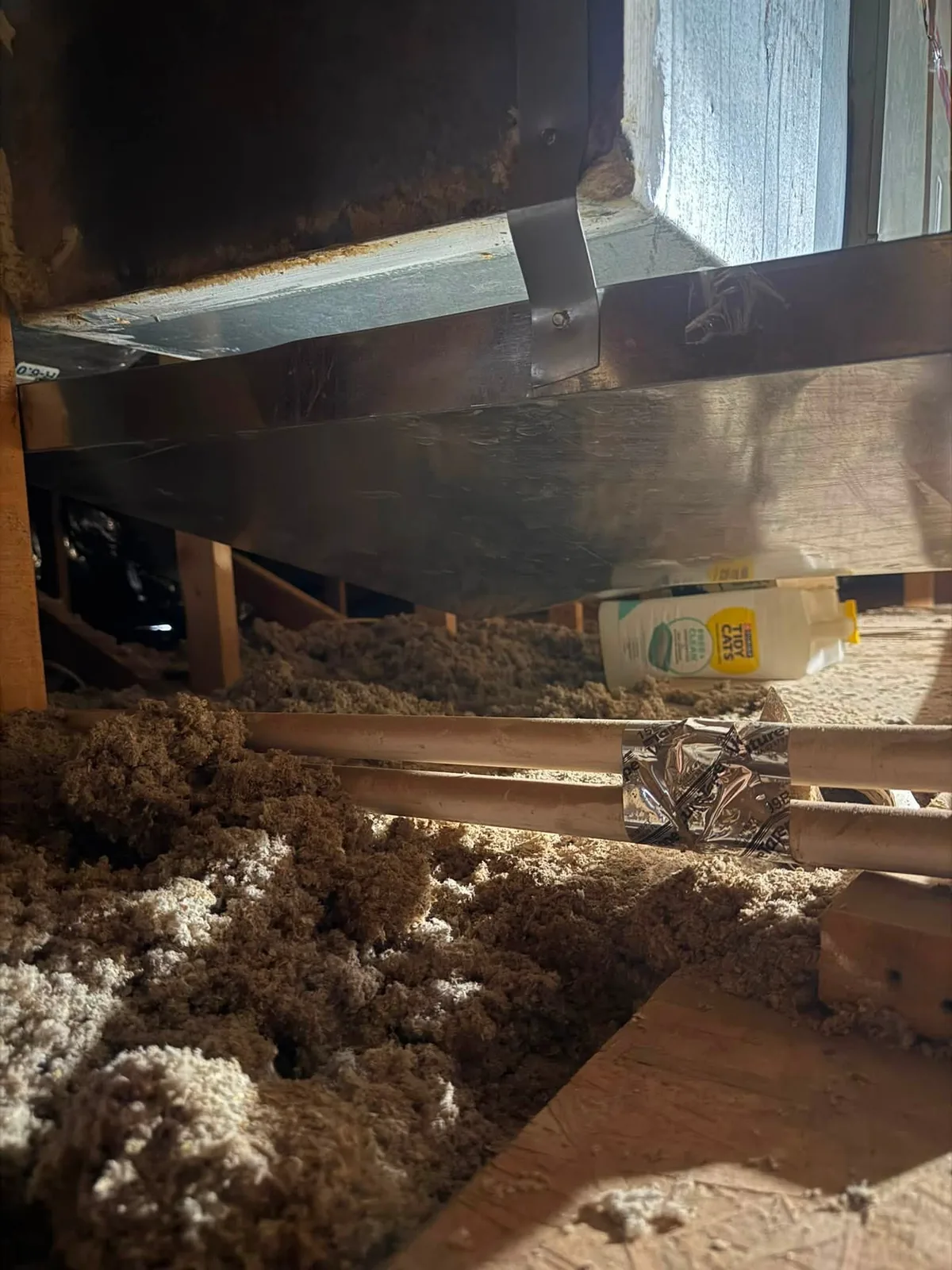
Exposed duct and plumbing area with insulation during a CTR AC condensation overflow water-damage project
Documented CTR job photoCustomer identity and exact address withheld

What this project documents

A real water-damage example, without exposing a customer’s home.

An HVAC condensate problem led to interior water damage

CTR’s public project update identifies an overflowing AC condensation pan as the source of water damage inside the home. The update does not identify the homeowner or a street address, so this page intentionally does not either.

Affected materials were removed before drying

The project update states that affected materials were removed and professional drying equipment was set up to dry the structure. The exact demolition and repair scope is not published, so this page does not speculate beyond that documented work.

The goal was to dry the structure and reduce moisture risk

The published project note explains that drying was used to address the wet structure and help prevent mold. Whether any individual home needs remediation, reconstruction, or an insurance claim review depends on its own inspection.

Why this matters locally

Small AC drainage failures can create a larger drying question.

CTR serves Mesa and the Phoenix Valley, where property owners often need a clear division between fixing an HVAC source and addressing water that has already reached the home. An AC technician may correct a drain line, pump, pan, or other mechanical issue. A water-damage inspection focuses on the materials that became wet and whether they need drying, removal, or repair.

This project page is intentionally specific about the documented cause and mitigation work, while staying honest about what was not published. The original job update does not provide a city, street address, customer name, insurance outcome, or final reconstruction scope. It is therefore presented as a CTR service example—not as a city-specific claim or a guaranteed outcome for another property.


Mesa & Phoenix Valley homeowner guide

What to do after an AC drain line or condensation pan overflows.

Address an active AC source safely

If water is still moving, prioritize safety and arrange for a qualified HVAC professional to correct the mechanical issue. Water-restoration work addresses the property damage; the AC system itself may require a separate HVAC repair path.

Document what is visible before it changes

Photos of the overflow area, damp finishes, and any affected belongings can help establish a record of conditions. If insurance may be involved, keep the date and cause of the event clear when speaking with the carrier.

Check for moisture beyond the obvious drip

A stopped overflow does not confirm that nearby drywall, insulation, framing, flooring, or concealed cavities are dry. A water-damage inspection can help determine what materials need attention and what can remain in place.

Keep drying and repair decisions connected

When materials have to be opened or removed, the property still needs a repair plan afterward. CTR can coordinate mitigation, documentation, and reconstruction under one restoration project rather than handing off the final repair stage.

A factual project record

One job does not define every water loss.

The visible conditions, materials affected, drying plan, insurance coverage, and repair path are different at every property. This page is useful context for a similar AC overflow, but an on-site inspection determines the actual scope of work.

Questions about AC overflow water damage

Practical answers for property owners.

Can an AC condensation overflow cause hidden water damage?

It can. Water may travel from the overflow point into nearby building materials or concealed areas. The amount of damage and the appropriate next step depend on where moisture reached, how long it remained there, and the materials involved.

If the AC issue is repaired, do I still need a water-damage inspection?

Repairing the AC can stop the source, but it does not by itself confirm that affected building materials are dry. An inspection can help separate the HVAC repair from the restoration work needed for wet finishes or structural materials.

Can CTR help with both drying and the repairs after mitigation?

CTR’s water-damage service includes inspection, mitigation, structural drying, and a plan for reconstruction when materials need to be opened or removed. The exact repair scope is developed from the conditions found at the property.

Will an insurance policy cover water damage from an AC overflow?

Coverage depends on the policy, the cause of the damage, deductibles, and the carrier’s determination. CTR can document the restoration work and bill insurance directly when applicable, but does not decide coverage or promise a claim outcome.

Open 24/7 · Free inspection · No trip fee

Concerned about an AC overflow or water that may still be trapped?

Open 24/7 · Call (480) 416-1581